-
tél : +86-592-6382791
-
e-mail : sales@pidmaxwell.com
tél : +86-592-6382791
e-mail : sales@pidmaxwell.com


Commande SCR pour éléments chauffants en disiliciure de molybdène (MoSi2)
Les éléments chauffants en disiliciure de molybdène (MoSi2), tels que Kanthal Super, sont largement utilisés dans les fours industriels à haute température fonctionnant jusqu’à 1800°C. Cependant, le contrôle de la puissance fournie à ces éléments nécessite des types spécifiques de contrôleurs de puissance à redresseur commandé au silicium (SCR) ou à thyristors en raison des caractéristiques électriques particulières du MoSi2.
Le défi : caractéristiques de résistance du MoSi2
Le principal défi dans le contrôle des éléments chauffants en MoSi2 est leur coefficient de température de résistance positif (PTC) extrême.
Contrairement aux fils résistifs standard (comme le Nichrome) qui maintiennent une résistance relativement constante, le MoSi2 présente une résistance extrêmement faible à froid — se comportant presque comme un court-circuit. À mesure que l’élément chauffe, sa résistance augmente considérablement, souvent d’un facteur de 10 à 16 fois sa résistance à froid
Si la pleine tension est appliquée à un élément MoSi2 froid, il tirera un courant d’appel massif (jusqu’à 15 ou 16 fois le courant nominal de fonctionnement). Cette énorme surtension de courant peut facilement faire sauter les fusibles, déclencher les disjoncteurs, saturer les transformateurs d’isolement ou détruire le contrôleur SCR lui-même
Spécifications requises du contrôleur SCR
Pour contrôler de manière sûre et efficace les éléments chauffants MoSi2, le contrôleur de puissance SCR doit être équipé de modes d’amorçage spécifiques et de fonctions de protection. Les simples contrôleurs marche/arrêt ou à déclenchement au passage par zéro sont totalement inadaptés et provoqueront une défaillance ou des dommages au système.
Le contrôleur SCR doit posséder les capacités suivantes :
1. Amorçage à angle de phase
Le contrôleur doit prendre en charge l’amorçage à angle de phase (également appelé contrôle par angle de phase). Dans ce mode, le SCR ne s’active que pendant une portion de chaque demi-cycle AC. En faisant varier l’angle d’amorçage, le contrôleur régule en douceur la tension et le courant RMS appliqués à la charge. Ceci est essentiel pour appliquer progressivement la puissance à l’élément froid à faible résistance. Le déclenchement au passage par zéro ne peut pas être utilisé lors du démarrage à froid car il applique la tension secteur complète pendant des cycles AC complets, provoquant une surintensité immédiate.
2. Démarrage progressif
Une fonction de démarrage progressif (Soft Start) est obligatoire. Le démarrage progressif limite automatiquement l’angle d’amorçage lorsque la puissance est appliquée pour la première fois, puis l’augmente progressivement sur une durée définie (généralement d’au moins 2 à 3 secondes). Cette montée en tension graduelle empêche les forts courants d’appel et protège à la fois l’élément chauffant et le transformateur de puissance contre la saturation
3. Limitation de courant
Comme la résistance à froid est très faible, le seul démarrage progressif n’est pas toujours suffisant. Le SCR doit disposer d’une fonction active de limitation de courant. Le contrôleur surveille en continu le courant RMS et réduit automatiquement l’angle de phase afin de maintenir le courant en dessous d’une limite maximale sûre prédéfinie, indépendamment de la demande de puissance du régulateur de température. Le contrôleur reste en mode limitation de courant jusqu’à ce que l’élément chauffe et que sa résistance naturelle augmente suffisamment pour limiter le courant par elle-même.
4. Passage au déclenchement retardé / fonctionnement en train d’impulsions (optionnel mais recommandé)
L’amorçage à angle de phase produit un mauvais facteur de puissance et génère des harmoniques électriques importantes. Les contrôleurs SCR modernes avancés (tels que Eurotherm EPower ou Watlow Power Series) offrent un mode hybride ou « mode de transfert ».
• Lors du démarrage à froid, le SCR utilise l’amorçage à angle de phase avec limitation de courant.
• Une fois que l’élément atteint sa température de fonctionnement et que sa résistance se stabilise, le contrôleur bascule automatiquement vers un déclenchement au passage par zéro / fonctionnement en train d’impulsions (ou déclenchement retardé si un transformateur est utilisé). Cela améliore considérablement le facteur de puissance et réduit la distorsion harmonique pendant les longues périodes de maintien en température.
Considérations relatives au transformateur
Les éléments MoSi2 fonctionnent généralement à très basse tension et à courant élevé, ils sont donc presque toujours alimentés via un transformateur d’isolement abaisseur.
Lorsqu’un SCR commande le primaire d’un transformateur :
• Le SCR doit être conçu pour supporter des charges inductives.
• Les fonctions de démarrage progressif et de déclenchement retardé sont essentielles pour éviter la saturation du noyau du transformateur, ce qui provoquerait autrement de fortes pointes de courant et des fusibles grillés [1] [2].
Résumé des recommandations
Lors de la sélection d’un contrôleur de puissance SCR pour des éléments chauffants MoSi2, vous devez spécifier une unité disposant des fonctionnalités suivantes :
• Capacité d’amorçage à angle de phase
• Démarrage progressif (réglable, minimum 2-3 secondes)
• Limitation de courant (réglable)
• Prise en charge des charges inductives / transformateur
• Idéalement, un mode de transfert automatique (de l’angle de phase vers le déclenchement au passage par zéro / train d’impulsions) pour une meilleure efficacité énergétique et un meilleur facteur de puissance.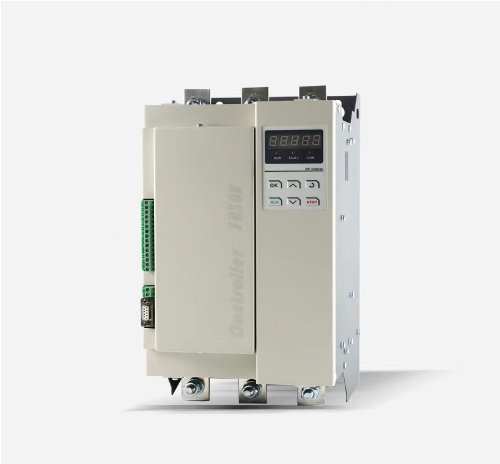
Schéma de câblage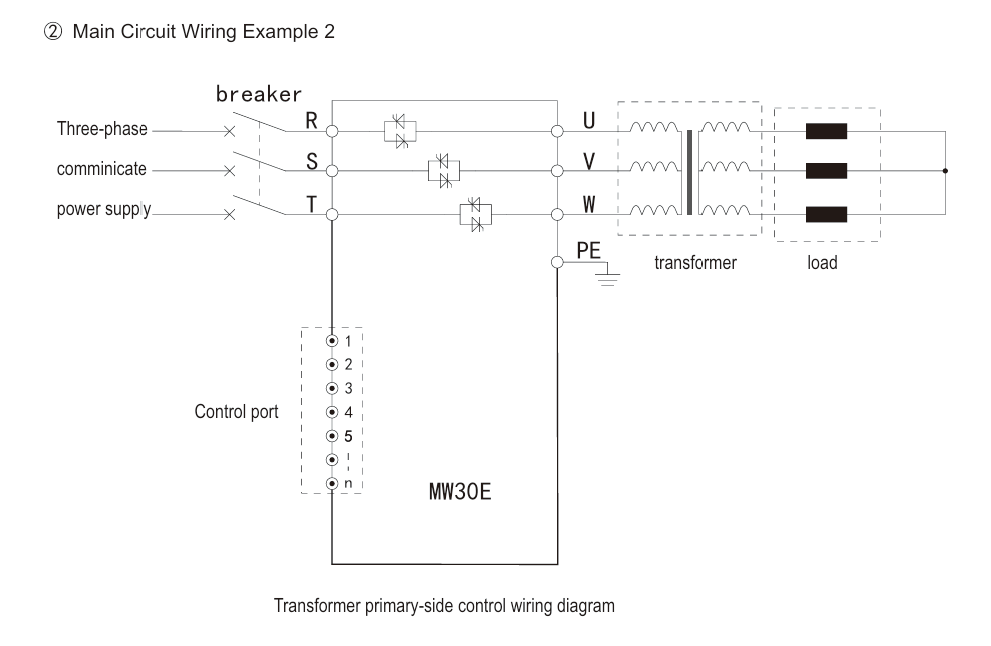

adresse : NO.201 Binhuyili, HaiCang district, XiaMen,FuJian, China 361026
Max liao: +8618150368619(whatsapp)
e-mail : sales@pidmaxwell.com
numériser via wechat
Scan to Whatsapp